
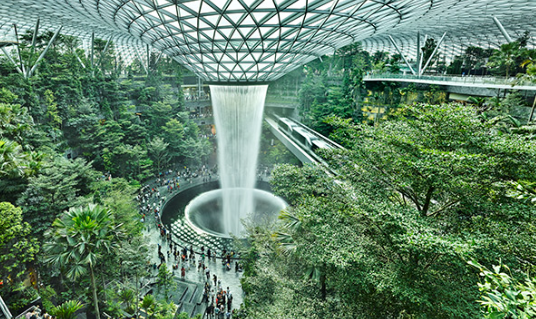
Peter Walker is a pioneering landscape architect whose innovative designs blend nature and built environments seamlessly. His approach goes beyond traditional landscaping; it considers the landscape as an integral aspect of architecture, creating spaces that are not just functional but also visually captivating.
1. The Philosophical Underpinning of Landscape Architecture
At the heart of Peter Walker’s projects lies a profound philosophical understanding of what landscape architecture entails. He views landscape not merely as a decorative element but as a critical component that shapes human experience. For instance, in the National 9/11 Memorial in New York City, Walker emphasizes the importance of space and memory, using water and trees to create a reflective environment that pays tribute to the events of September 11, 2001.
This conceptual framework ensures that every project Walker undertakes is deeply rooted in its context. He often employs natural materials and elements to enhance the interaction between people and their surroundings. By treating landscapes as living elements, he fosters a sense of connection that can transform spaces into meaningful experiences, promoting both emotional well-being and environmental awareness.
-
- Consider the cultural context of your project.
-
- Use natural materials to reflect the surroundings.
-
- Incorporate water features for tranquility.
-
- Design for human interaction with natural elements.
2. Innovative Design Techniques: The Walker Way
Walker employs a range of innovative design techniques in his projects that showcase his unique approach to landscape architecture. For example, in the San Francisco Botanical Garden, he employs a layering technique that promotes biodiversity while creating visually stunning vistas. Different layers of planting not only serve functional purposes, such as erosion control but also cater to a variety of wildlife.
His designs often include the use of grids and geometric patterns, providing a sense of order and clarity. This is evident in his work at the University of California, Berkeley campus, where he has created harmonious outdoor spaces that guide movement and flow, integrating paths, seating areas, and green spaces into a cohesive environment. Such methodology emphasizes the relationship between man-made structures and the natural world, allowing for a fluid transition between them.
-
- Utilize layering to create biodiversity in your designs.
-
- Implement geometric patterns for a sense of order.
-
- Prioritize pathways that encourage movement and interaction.
-
- Always think about integrating different elements harmoniously.
3. Sustainability in Landscape Architecture
Sustainability is a core principle in Peter Walker’s design ethos, driving him to create spaces that not only meet aesthetic demands but also address environmental challenges. In projects like The High Line in New York City, Walker advocates for urban renewal through sustainable practices. The use of native plants reduces water usage, while green infrastructure helps manage stormwater effectively.
Another integral part of his sustainable approach is community engagement. Walker believes in involving local stakeholders to ensure that the landscapes serve their intended purpose effectively and resonate with the community. By designing with sustainability and social responsibility in mind, he creates landscapes that can thrive over time, ensuring that they remain relevant and beneficial for years to come.
-
- Choose native plants to reduce resource consumption.
-
- Engage with the local community for better outcomes.
-
- Incorporate green infrastructure to manage resources efficiently.
-
- Design for longevity by focusing on sustainable materials.
In summary, Peter Walker’s work exemplifies how landscape can be regarded as architecture. His philosophical insights, innovative design techniques, and commitment to sustainability position him as a leading figure in the field. For those inspired by his approach, consider engaging with a professional landscape architect or starting a project that prioritizes the integration of nature into your built environment. The future of architecture lies in making thoughtful connections with the landscapes we inhabit.