
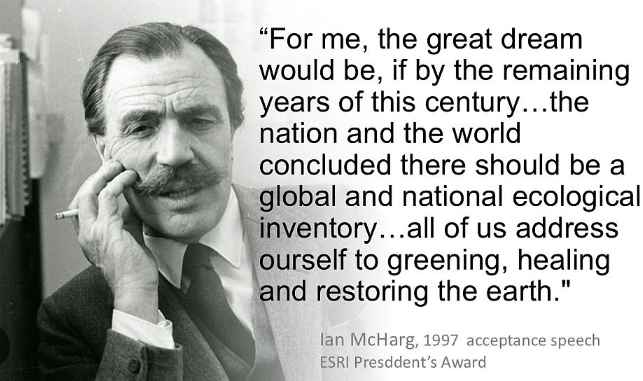
Landscape architect Ian McHarg is renowned for his innovative approach to environmental planning, which has significantly influenced the field of sustainable design. His work emphasizes the importance of understanding and integrating natural systems into urban planning and development.
1. The Foundation of Ecological Design
In the 1960s, McHarg published his seminal book, “Design with Nature.” This work established the principles of ecological design, advocating for a harmonious relationship between humans and nature. McHarg argued that by studying natural systems—like soil, water, and vegetation—designers can create spaces that enhance rather than degrade the environment.
His methods included mapping ecological features to identify suitable locations for development while minimizing ecological disruption. This approach laid the groundwork for many contemporary sustainable design practices, demonstrating that land-use decisions can respect and protect the environment.
-
- Research local ecosystems before starting any design project.
-
- Incorporate existing natural features into your designs.
-
- Use ecological mapping to assess areas for development.
-
- Consult with environmental scientists to enhance project sustainability.
2. Innovations in Urban Planning
McHarg’s influence extends beyond individual projects; it reshaped urban planning philosophies. He promoted the idea that cities can be designed to respect the natural environment, advocating for green spaces, wetlands, and native flora within urban landscapes. By prioritizing ecological health, urban planners can create vibrant communities that support both human beings and wildlife.
One notable project was the planning of the U.S. city of Franklin, where McHarg’s principles guided the design of sustainable residential areas. By incorporating green corridors, parks, and the natural landscape into the design, the project exemplified how urban areas can thrive without sacrificing ecological integrity.
-
- Integrate green spaces in urban designs to promote biodiversity.
-
- Encourage community gardens to nurture local food sources.
-
- Develop multi-use paths for both people and wildlife.
-
- Engage the community in the planning process to raise awareness.
3. Lasting Legacy and Contemporary Applications
Today, McHarg’s philosophies continue to resonate in the field of sustainable design. His work has inspired various movements, including green architecture, sustainable urbanism, and regenerative design. Modern designers are now applying his principles to create environments that are both functional and ecologically sound.
For example, many architects utilize McHarg’s ideas in developing buildings that minimize carbon footprints. Techniques such as passive solar design, rainwater harvesting, and green roofs not only reduce environmental impact but also enhance the quality of life for inhabitants. These practices illustrate that McHarg’s vision is not just theoretical; it can be applied in practical, impactful ways today.
-
- Consider using sustainable materials in your designs.
-
- Incorporate renewable energy sources into projects.
-
- Focus on water conservation techniques.
-
- Evaluate lifecycle impacts of design decisions.
In conclusion, Ian McHarg’s contributions to sustainable design are more relevant than ever. By understanding and applying his principles, we can develop urban environments that respect our planet’s ecosystems while fostering community and enhancing human well-being. Explore these concepts further and consider integrating them into your next project for a more sustainable future.