
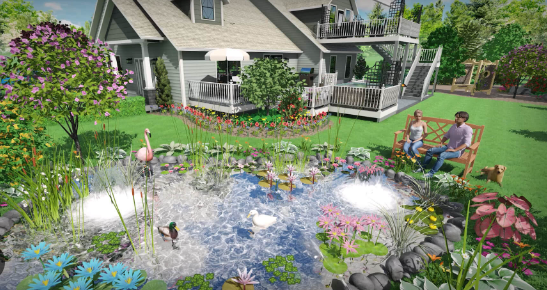
In recent years, real-time landscaping architecture has emerged as a critical tool for urban planners and landscape designers. With cities expanding and green spaces dwindling, innovative landscaping solutions are necessary for enhancing urban environments. This article explores the significance of real-time landscaping architecture in 2021, highlighting its applications and benefits.
The Rise of Real-Time Landscaping Technology
Real-time landscaping architecture leverages cutting-edge technology to create dynamic and responsive designs. Tools such as Geographic Information Systems (GIS) and 3D modeling allow architects to visualize landscapes instantly, adapting designs as needed. In 2021, these technologies have become more accessible, enabling professionals to collaborate seamlessly and engage with clients more effectively. This capability not only enhances design quality but also fosters a community-centric approach, allowing for designs that better reflect the needs and preferences of the local population.
Sustainability and Eco-Friendly Solutions
Sustainability is at the forefront of modern landscape architecture, and real-time technologies are key to achieving eco-friendly designs. By using data analytics and simulation tools, architects can model environmental impacts before implementation. They can assess factors such as stormwater management, soil health, and local flora, allowing for designs that support biodiversity and reduce carbon footprints. In 2021, incorporating sustainable practices has become a standard expectation among clients, and real-time landscaping architecture simplifies this integration, ensuring that projects align with broader environmental goals.
Enhancing Community Engagement
One of the most significant advantages of real-time landscaping architecture is its ability to boost community engagement. Interactive design tools allow stakeholders to visualize proposed changes and provide feedback instantly. This inclusion creates a sense of ownership among community members and promotes collaboration. In 2021, cities are increasingly prioritizing public input in development projects, and real-time landscaping facilitates this process. Engaging the community not only leads to designs that meet local needs but also fosters pride and stewardship in the final outcomes.
In conclusion, real-time landscaping architecture is reshaping the way we envision and implement urban green spaces. By harnessing technology, prioritizing sustainability, and enhancing community involvement, landscape architects are designing cities that are not only beautiful but also functional and environmentally responsible. If you’re interested in how these innovations are shaping the future of urban spaces, consider exploring further or getting involved in local landscaping projects.