
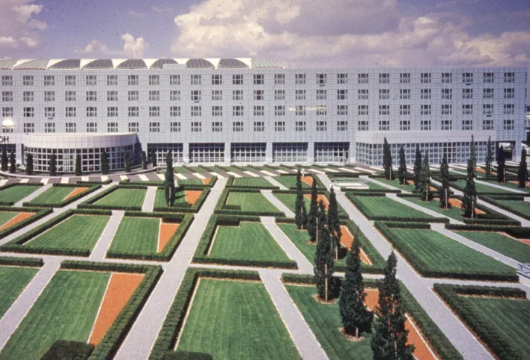
Peter Walker is renowned for his designs that exemplify simplicity and elegance in architecture and landscape. His approach strips away the unnecessary, focusing instead on essential elements that create beauty and functionality.
1. The Philosophy of Minimalism
At the core of Peter Walker’s design philosophy lies the concept of minimalism. This principle emphasizes the importance of space, light, and natural elements. By removing clutter and excess, Walker’s work promotes a serene atmosphere that invites contemplation. For instance, in projects like the National 9/11 Memorial, the use of open water and trees exemplifies how simplicity can evoke deep emotions while fostering a sense of peace.
Furthermore, Walker’s minimalistic designs reflect an understanding of how landscapes interact with human experiences. He believes that every element, no matter how small, should serve a purpose, enhancing the overall environment. In this sense, even the placement of a single tree can be a profound statement about landscape design, shaping how people move through and connect with a space.
-
- Identify the essential elements needed in your design.
-
- Use negative space effectively to create breathing room.
-
- Incorporate natural light into your projects where possible.
-
- Focus on the purpose of each element within the design.
-
- Avoid unnecessary decoration or features.
2. Interplay of Nature and Architecture
Walker skillfully blends architecture with the natural environment, creating harmonious spaces that feel organic. His designs often incorporate existing landscapes, allowing nature to inform the architecture rather than forcing it into a predetermined mold. For example, in the design of the San Francisco Botanical Garden, Walker utilized the existing topography and microclimates to dictate plant selection, resulting in a garden that feels cohesive and integrated with its environment.
This interplay of nature and architecture not only enhances aesthetic appeal but also promotes sustainability. By designing spaces that work with their surroundings, Walker reduces the need for irrigation and artificial lighting. This green approach is not just beneficial for the environment but also results in lower long-term maintenance costs, making projects more sustainable in the long run.
-
- Assess the existing landscape before beginning design work.
-
- Incorporate native plants to reduce maintenance needs.
-
- Design structures that reflect natural light and views.
-
- Allow natural processes to guide your material choices.
-
- Plan for seasonal changes in your designs.
3. Emphasis on Functionality
A significant aspect of Walker’s designs is their unwavering focus on functionality. Each space is crafted to enhance user experience, making it intuitive and interactive. For instance, his work on the MIT Media Lab courtyard emphasizes not just aesthetics but also usability, providing spaces for collaboration and creativity that encourage student interaction.
This commitment to functionality means considering the needs of end-users from the outset. Walker often consults with community members and stakeholders, integrating their feedback into the design process. This approach ensures that the final product serves the community’s needs while still achieving a beautiful, simple design that stands the test of time.
-
- Engage with users early in the design process to understand their needs.
-
- Prioritize accessibility in all designs.
-
- Evaluate how spaces can be used in multiple ways.
-
- Incorporate flexible elements that can adapt over time.
-
- Regularly assess designs for wear and usability post-construction.
By studying Peter Walker’s approach to design, one can draw inspiration for creating spaces that are not only beautiful but also functional and sustainable. Simplifying designs can lead to more effective use of space and resources, ultimately creating a greater impact in architecture and landscape design. Whether you’re an architect, a designer, or simply someone interested in aesthetics, consider applying these principles to your work or daily life.