
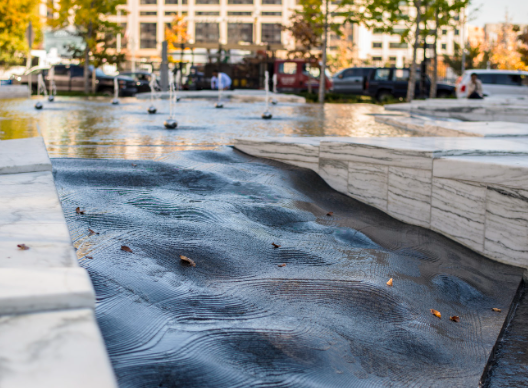
Water has been a vital design element in many of landscape architect Gustafson’s projects. His unique approach to integrating water into landscapes not only enhances aesthetic appeal but also promotes sustainability and user engagement.
1. The Aesthetic Impact of Water
Gustafson skillfully uses water to create visual focal points that draw visitors into the landscape. From reflecting pools to dynamic water features, water adds a layer of beauty that transforms public spaces. Take, for instance, the National World War I Memorial in Washington, D.C., where a lush, serene water installation encourages reflection and connection. The presence of water also creates a mesmerizing interplay of light and movement, changing throughout the day and seasonally.
Water can be adjusted to serve different aesthetic purposes, whether it’s a peaceful pond to create tranquility or fountains that energize a space. Gustafson’s versatility with water invites curiosity and exploration, making spaces more engaging. In addition, water’s ability to mirror the surroundings emphasizes the surrounding architecture and flora, creating a harmonious blend of elements.
-
- Explore how water can reflect nature and structures within its vicinity.
-
- Consider varying water levels to create different moods in your design.
-
- Incorporate dynamic elements like fountains to add excitement.
-
- Utilize natural materials to complement the water features.
2. Ecological Benefits of Water Design
Beyond aesthetics, Gustafson’s work emphasizes the ecological benefits of integrating water into landscapes. Water features can play a crucial role in water management and biodiversity conservation. For example, rain gardens and bio-swales not only collect rainwater but also filter pollutants, promoting cleaner ecosystems. This dual functionality makes water an ideal component in sustainable landscape design.
Furthermore, incorporating native plant species alongside water features can provide habitats for local wildlife. Gustafson’s designs often encourage the regeneration of local ecosystems by using water as a nurturing element. This not only enhances biodiversity but also creates educational opportunities for visitors to learn about local ecology and conservation efforts.
-
- Design water features that can naturally manage stormwater.
-
- Use native vegetation to promote local biodiversity.
-
- Implement educational signage to inform visitors about the ecological aspects.
-
- Encourage wildlife by creating varied habitats around water installations.
3. Enhancing User Experience with Water
Gustafson recognizes that water can significantly enhance the user experience in public spaces. By creating interactive elements, such as splash pads or shallow pools, he encourages visitors of all ages to engage with the landscape actively. These features not only provide a sense of fun but also invite people to cool off and socialize in warm weather.
Additionally, the soothing sounds of flowing water can create a calming atmosphere, encouraging relaxation and mindfulness. Spaces integrated with water often become focal points for community gatherings, yoga classes, and casual meetups, fostering a sense of connection among visitors. In essence, Gustafson demonstrates that water can be not just a backdrop but an integral part of community interaction.
-
- Incorporate features that invite direct interaction, like fountains.
-
- Use water’s sounds to mask urban noise and create a tranquil environment.
-
- Design multiple seating areas that face the water for improved accessibility.
-
- Consider seasonal changes in water features to keep interest alive.
In conclusion, Gustafson’s innovative use of water as a design element illustrates its multifaceted benefits. As a design element, water not only beautifies spaces but also supports ecological balance and enhances community interactions. Consider consulting with a landscape architect or starting a project that integrates water effectively into your own space for an enriching experience.